
Waist-to-Hip Ratio Calculator
Waist-to-Hip Ratio Calculator
Determine body fat distribution and cardiovascular risk
Waist: Measure at your narrowest waist point (typically just above your belly button). Keep the tape snug but not tight, and breathe out naturally.
Hips: Measure around the widest part of your buttocks/hips with your heels together.
Awaiting Inputs
Provide waist and hip sizes in centimeters or inches, along with biological gender, to calculate risk and view fat distribution patterns.
What is Waist-to-Hip Ratio (WHR)?
The Waist-to-Hip Ratio (WHR) is a quick, clinical indicator used to measure body fat distribution and assess general health risk. It compares the circumference of your waist to that of your hips. Unlike Body Mass Index (BMI), which measures total body mass relative to height, WHR evaluates abdominal fat deposition, which correlates highly with visceral fat and cardiovascular complications.
How to Measure Your Waist and Hips
For accurate calculations, follow these clinical measurement instructions:
- Waist Measurement: Wrap the tape measure around the narrowest part of your abdomen (typically located just above the navel). Ensure the tape is parallel to the floor, lies flat against your skin, and is snug without pressing into the tissue. Take the measurement at the end of a normal, relaxed exhalation.
- Hip Measurement: Wrap the tape measure around the widest part of your hips/buttocks. Keep your feet together and ensure the tape is completely level.
- Consistency: Measure in the same unit (centimeters or inches) and avoid wrapping the tape over thick layers of clothing.
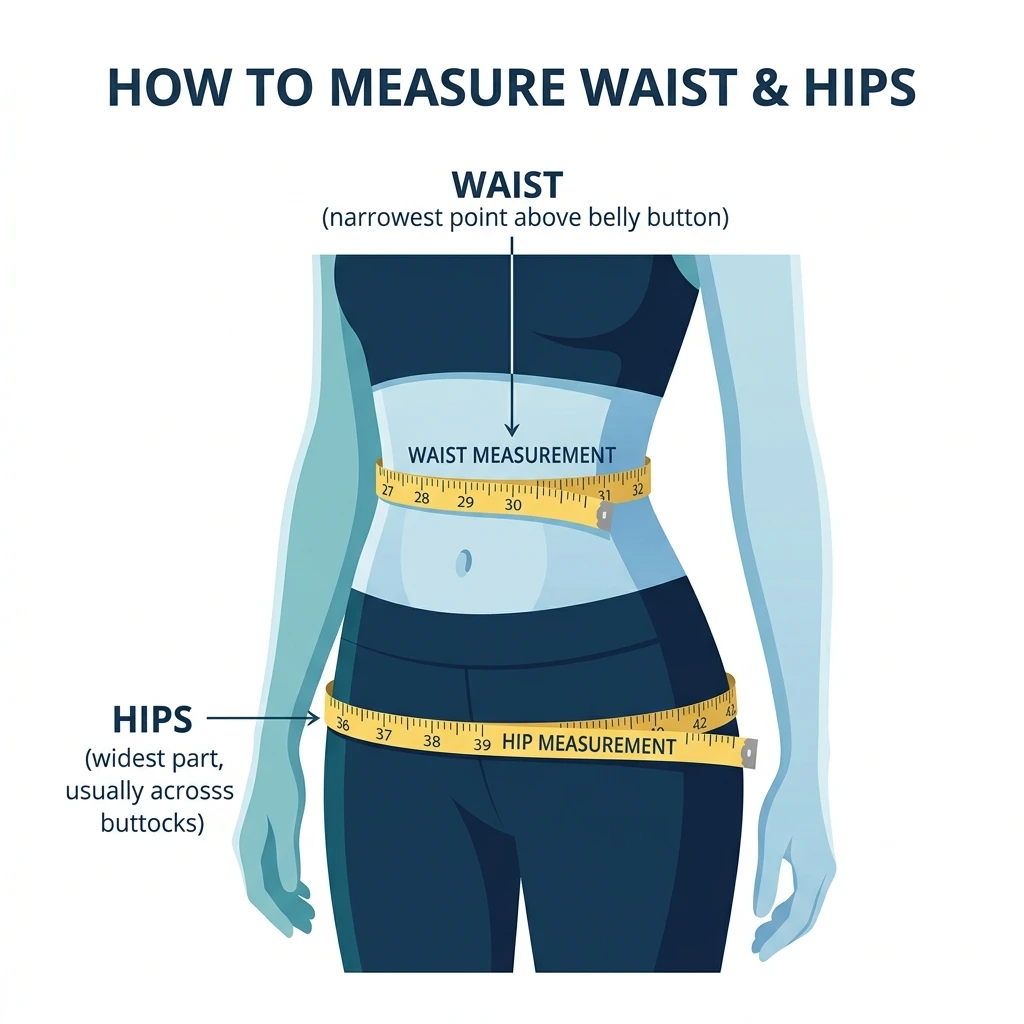
Figure 1: Correct measurement placements for waist and hips.
WHO WHR Risk Classifications
According to the World Health Organization (WHO), abdominal obesity is defined as a waist-to-hip ratio above 0.90 for men and above 0.85 for women.
| Gender | Low Risk (Normal) | Moderate Risk | High Risk (Abdominal Obesity) |
|---|---|---|---|
| Females | < 0.80 | 0.80 – 0.85 | ≥ 0.86 |
| Males | < 0.90 | 0.90 – 0.99 | ≥ 1.00 |
Health Implications: Apple vs. Pear Body Shapes
Where you carry body fat is as important as how much fat you carry. Fat distribution typically falls into two categories:
- Apple Shape (Android Obesity): Represents higher fat storage in the abdominal cavity (visceral fat). Visceral fat coats internal organs and is highly metabolically active, releasing inflammatory cytokines directly into the portal circulation. This shape is associated with a high waist-to-hip ratio and carries elevated risks of type 2 diabetes, coronary heart disease, and hypertension.
- Pear Shape (Gynoid Obesity): Represents fat stored primarily around the hips, buttocks, and thighs (subcutaneous fat). Subcutaneous fat is less metabolically active and acts as a passive storage site, carrying lower cardiovascular risks.
Frequently Asked Questions
What is a healthy waist-to-hip ratio?
+
A healthy waist-to-hip ratio is below 0.80 for women and below 0.90 for men. Ratios below these cutoffs place individuals in the low-risk category for cardiovascular and metabolic disorders.
Is WHR better than BMI?
+
WHR is a better predictor of cardiovascular disease and mortality than BMI because it directly evaluates abdominal visceral fat. BMI cannot differentiate between muscle mass and fat, nor does it account for where fat is stored on the body.
Can I spot-reduce fat to improve my WHR?
+
No, spot reduction of fat is a biological myth. To improve your waist-to-hip ratio, focus on overall fat loss through a caloric deficit, resistance training to maintain lean muscle, stress management (to lower cortisol which drives belly fat storage), and proper sleep.
Does age affect the waist-to-hip ratio?
+
Yes. As both men and women age, hormonal changes (such as falling estrogen levels after menopause in women and falling testosterone in men) naturally shift fat deposition patterns from the hips and limbs to the abdominal region, which can increase the WHR.
- World Health Organization. 2011. "Waist Circumference and Waist-Hip Ratio: Report of a WHO Expert Consultation." Geneva, Switzerland.
- Yusuf, S., et al. 2005. "Obesity and the risk of myocardial infarction in 27,000 participants from 52 countries: a case-control study." The Lancet 366(9497): 1640-1649.
- Welborn, T. A., Dhaliwal, S. S. 2007. "Preferred devices of obesity measurement: waist circumference, waist-to-hip ratio and body mass index." European Journal of Clinical Nutrition 61(12): 1373-1379.