
Lean Body Mass Calculator
Lean Body Mass Calculator
Calculate LBM via Boer, James, Hume & Peters Formulas
Awaiting Inputs
Provide height, weight, gender, and age category inputs to compute your lean body composition.
Understanding Lean Body Mass (LBM)
Lean Body Mass (LBM) is a part of body composition that is defined as the difference between total body weight and body fat weight. This means that it counts the mass of all organs except body fat, including bones, muscles, blood, skin, water, and everything else. While the percentage of LBM is usually not computed, it on average ranges between 60-90% of total body weight. Generally, men have a higher proportion of LBM than women do.
The dosages of some anesthetic agents, particularly water-soluble drugs, are routinely based on the LBM. Some medical exams also use the LBM values to normalize fluid volume and kidney filtration indicators. For body fitness and routine daily life, people normally care more about body fat percentage than LBM, though tracking LBM is crucial for tracking muscle building and athletic conditioning.
Lean Body Mass vs. Fat Free Mass
Lean body mass and fat free mass are often used interchangeably in general fitness discussions. While this is unlikely to cause issues in most cases, the two are not exactly the same:
Includes the combined mass of bones, skeletal muscles, water, ligaments, tendons, and internal organs. Internal organs include essential lipids (fat), and the mass of this essential fat is included within the measurement of lean body mass. Subcutaneous fat is excluded.
Calculated as the difference between total body mass and all fat mass, including essential fat. Subtracting the mass of essential fat from lean body mass yields fat free mass. This creates a 2-3% difference in men and a 5-12% difference in women.
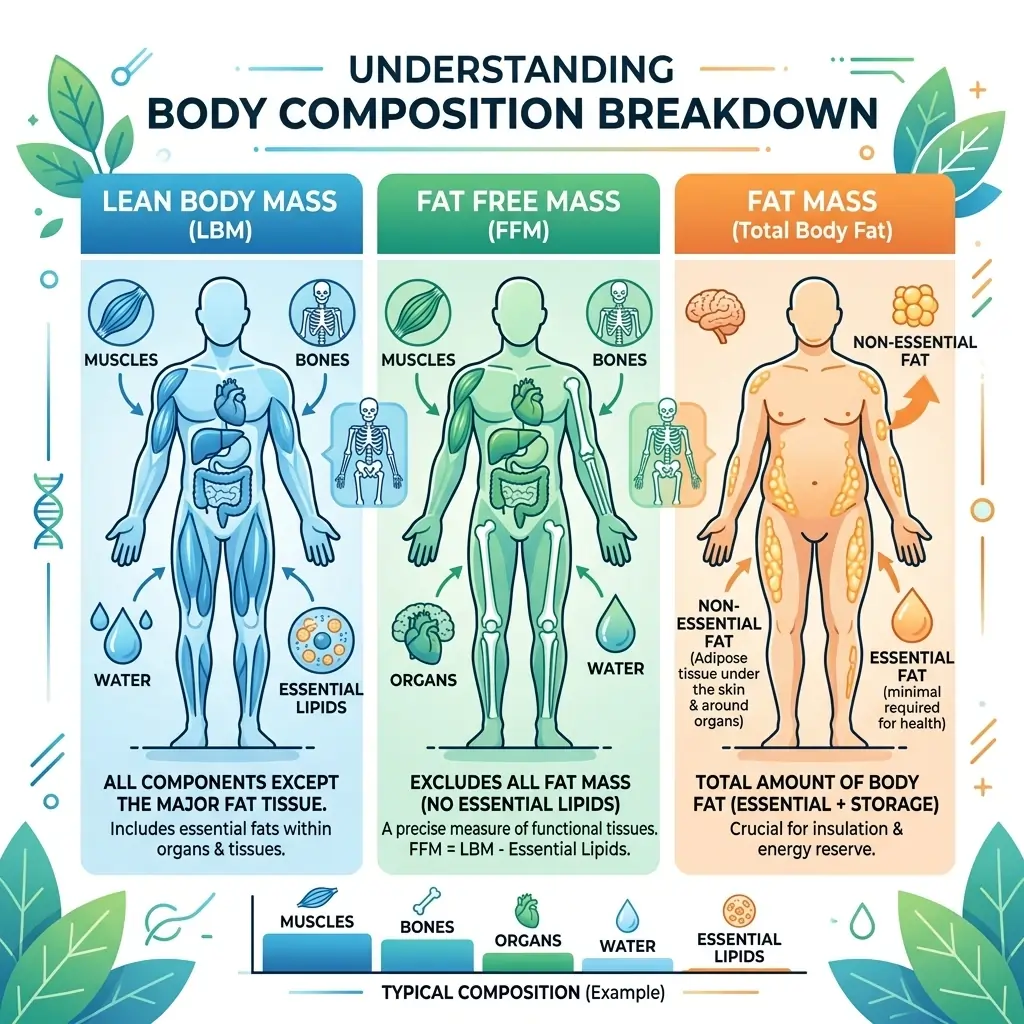
Figure 1: Comparison of LBM vs. Fat Free Mass.
Clinical Dosing & Physiological Significance
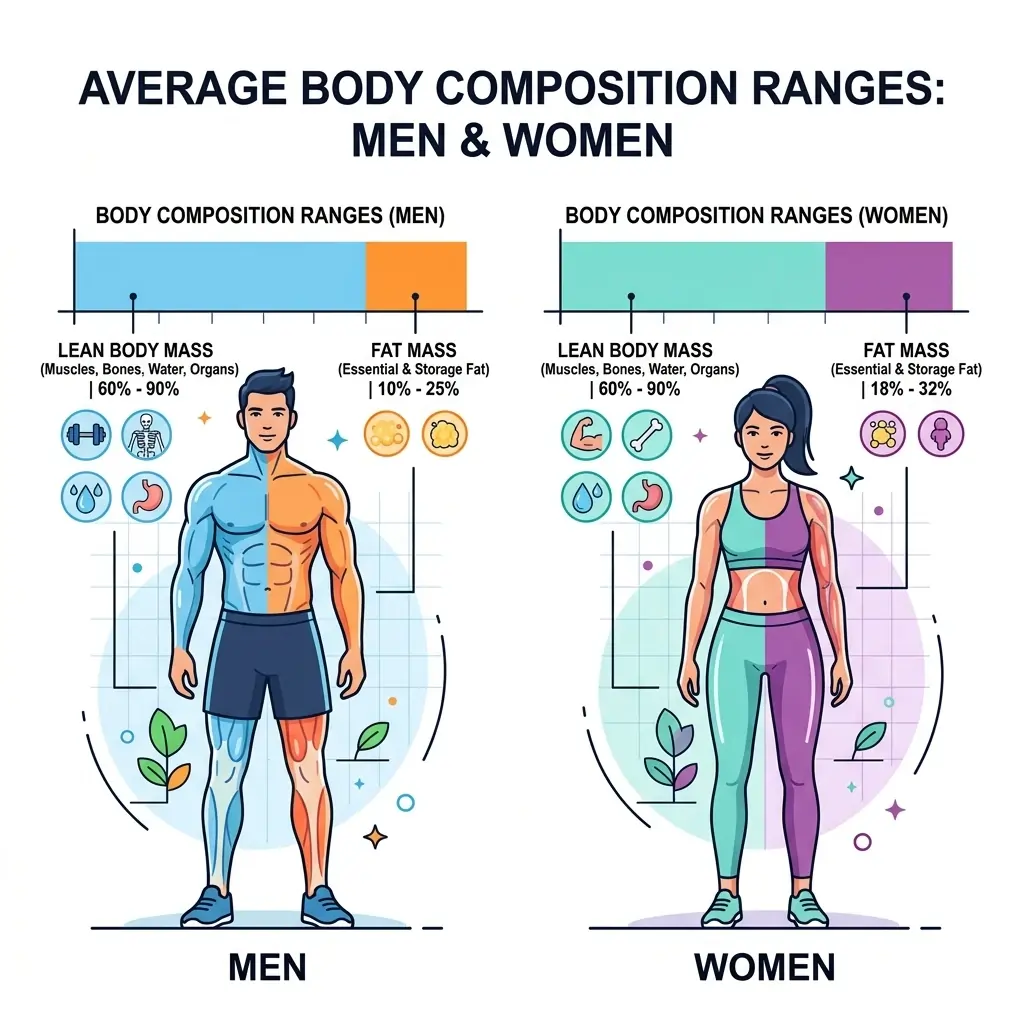
Figure 2: Body composition and LBM ranges by biological gender.
In clinical pharmacology, dosing based purely on total body weight can be highly inaccurate. Fat tissue receives significantly less blood flow per unit volume compared to muscle and visceral organs. Consequently, hydrophilic (water-soluble) anesthetic agents do not distribute readily into adipose tissue.
By using estimated LBM formulas, clinicians can normalize medication volume distributions and renal clearance rates, preventing toxic build-ups of water-soluble anesthetic agents in obese or muscle-wasted patients.
Additionally, LBM serves as a robust metric for determining basal metabolic rate (BMR) and skeletal muscle index during sarcopenia monitoring in elderly patient cohorts.
Multiple formulas have been developed for calculating estimated LBM (eLBM). In the equations below, W represents body weight in kilograms, and H represents height in centimeters.
Males:
eLBM = 0.407W + 0.267H - 19.2
Females:
eLBM = 0.252W + 0.473H - 48.3
Males:
eLBM = 1.1W - 128(W/H)²
Females:
eLBM = 1.07W - 148(W/H)²
Males:
eLBM = 0.32810W + 0.33929H - 29.5336
Females:
eLBM = 0.29569W + 0.41813H - 43.2933
Applicable for children aged 13-14 years old or younger. Estimates extracellular volume (eECV) to calculate LBM:
eLBM = 3.8 × eECV
Frequently Asked Questions
Why do anesthetic dosages use Lean Body Mass?
+
Dosages of certain medications, particularly water-soluble anesthetics, are based on lean body mass because lean tissue (muscles, organs, blood) contains the body's primary fluid volume where these drugs distribute. Calculating doses based on total weight in individuals with higher body fat could lead to accidental overdosing.
What is a healthy lean body mass percentage?
+
On average, lean body mass ranges between 60% and 90% of total body weight. Highly conditioned athletes, particularly men, tend to hover near 80-90% LBM, while women typically average 65-75% due to higher essential body fat levels.
How can I increase my lean body mass?
+
LBM is increased primarily by building skeletal muscle tissue. This is achieved through structured resistance/strength training and maintaining a high-protein diet that provides amino acids to synthesize new muscle tissue.
Which formula is the most accurate?
+
Boer and Hume are widely used and trusted in clinical settings for estimating body fluid and kidney filtration rates. The Peters formula is specifically optimized for children under 14, as child body composition differs significantly from adults.
- Boer P. "Estimated lean body mass as an index for normalization of body fluid volumes in man." Am J Physiol 1984; 247: F632-5
- James, W. "Research on obesity: a report of the DHSS/MRC group" HM Stationery Office 1976
- Hume, R. "Prediction of lean body mass from height and weight." J Clin Pathol. 1966 Jul; 19(4):389-91.
- A. M. Peters, H. L. R. Snelling, D. M. Glass, N. J. Bird. "Estimation of lean body mass in children." British Journal of Anaesthesia 106(5): 719-23 (2011).