GFR Calculator
Glomerular Filtration Rate Calculator
eGFR Kidney Function Estimator
Awaiting Inputs
Provide serum creatinine value, age, and biological gender to calculate GFR and view kidney stage classifications.
What is Glomerular Filtration Rate (GFR)?
Glomerular filtration rate (GFR) describes the rate of flow of filtered fluids through the kidney and is used as a primary measure of overall kidney function. Generally, a higher value of GFR indicates healthier kidney performance. A significant decrease in GFR indicates that the kidneys are not filtering blood properly, resulting in lower volumes of metabolic waste fluids being cleared over a given time.
The normal range of GFR adjusted for body surface area is 100 to 130 mL/min/1.73m² in men and 90 to 120 mL/min/1.73m² in women below the age of 40. After age 40, GFR decreases progressively with age. Refer to the table below for mean estimated GFR for different age ranges.
Expected GFR Averages by Age Group
Because kidney filters naturally decline as part of the aging process, standard population averages decrease steadily every decade:
| Age Range | Mean Estimated GFR (mL/min/1.73 m²) |
|---|---|
| 20 - 29 Years | 116 mL/min/1.73 m² |
| 30 - 39 Years | 107 mL/min/1.73 m² |
| 40 - 49 Years | 99 mL/min/1.73 m² |
| 50 - 59 Years | 93 mL/min/1.73 m² |
| 60 - 69 Years | 85 mL/min/1.73 m² |
| 70+ Years | 75 mL/min/1.73 m² |
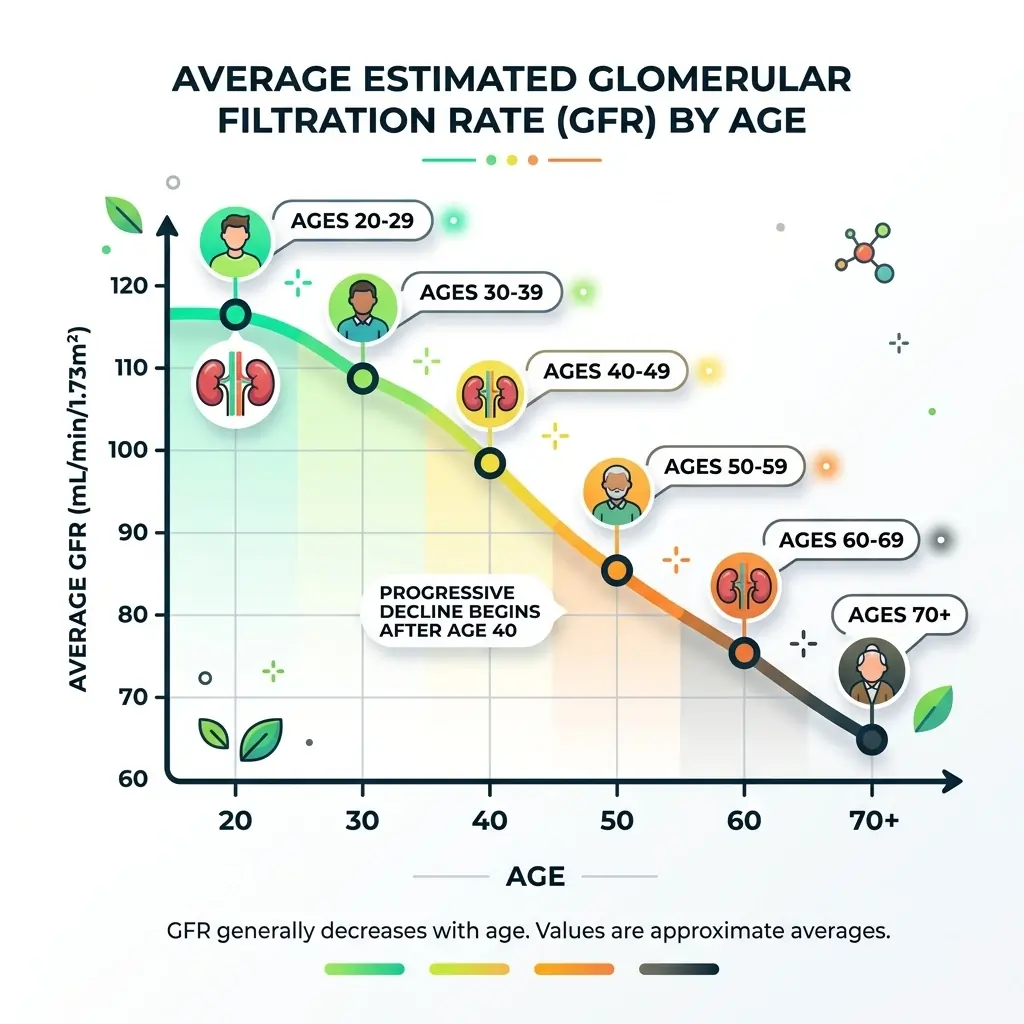
Figure 1: Mean population GFR ranges by age group.
Chronic Kidney Disease (CKD) Stages
A GFR value above 60 mL/min/1.73m² is usually adequate for most patients. Alone, it is not necessarily indicative of chronic kidney disease (CKD). However, a significant decline in GFR since a previous test can serve as an early warning indicator. Note that the sooner that kidney disease is diagnosed and treated, the higher the probability that the need for dialysis can be prevented.
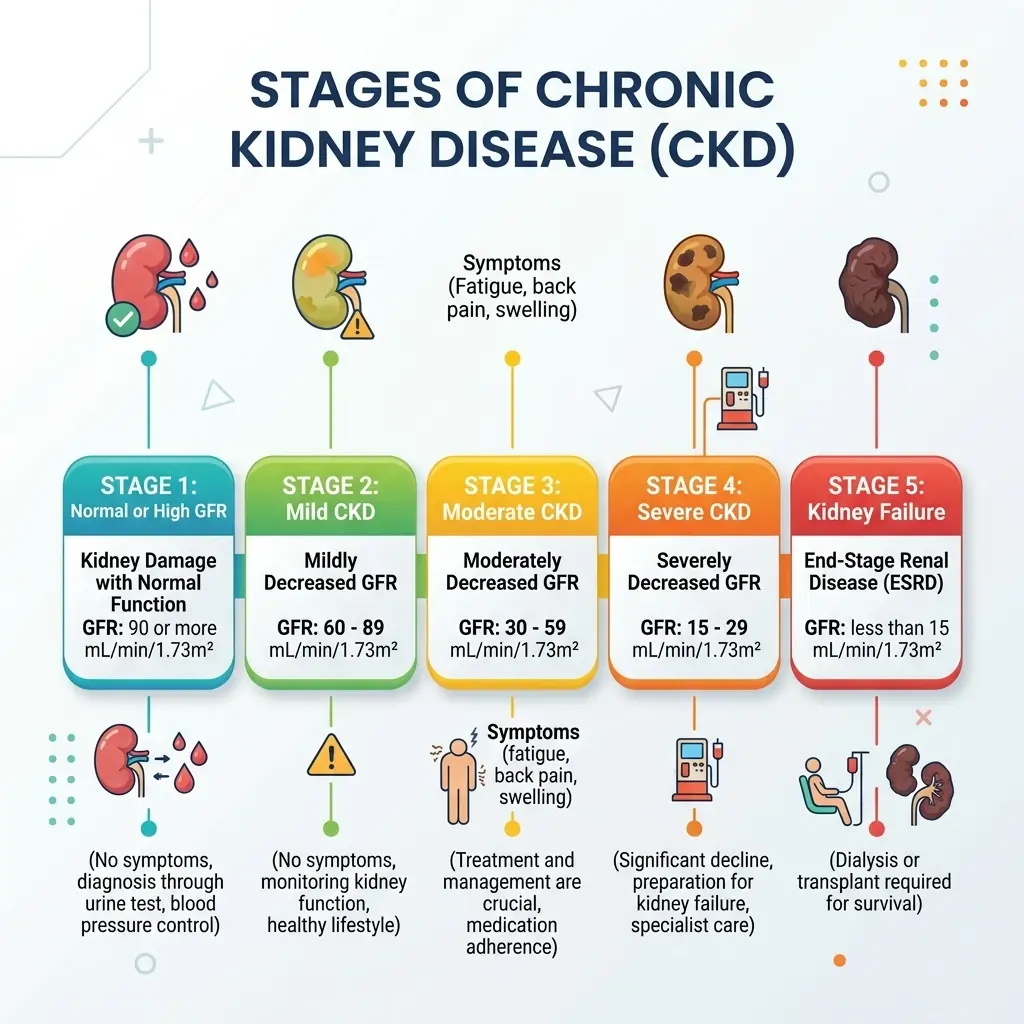
Figure 2: Clinical GFR stages of Chronic Kidney Disease.
| Stage | GFR Range | Clinical Status |
|---|---|---|
| Normal | 90+ | No proteinuria, normal kidneys |
| CKD Stage 1 | 90+ | Kidney damage with normal GFR |
| CKD Stage 2 (Mild) | 60 – 89 | Mild reduction in kidney function |
| CKD Stage 3 (Moderate) | 30 – 59 | Moderate reduction in function |
| CKD Stage 4 (Severe) | 15 – 29 | Severe reduction in function |
| CKD Stage 5 (Failure) | < 15 | Kidney failure / Dialysis required |
Clinical Update: Why Race Was Removed from GFR Equations
Historical equations like the MDRD (developed in 1999) and the original 2009 CKD-EPI included a coefficient multiplier for Black patients (multiplying their GFR output by 1.212 or 1.159 respectively). The premise was that Black individuals had, on average, higher muscle mass, resulting in higher creatinine release for the same kidney function.
In September 2021, the National Kidney Foundation (NKF) and the American Society of Nephrology (ASN) Task Force recommended the immediate adoption of the new 2021 CKD-EPI creatinine equation that does not include race.
Medical consensus established that race is a social construct rather than a biological one, and the inclusion of race falsely inflated estimated kidney function in Black patients. This overestimation caused systemic health disparities by delaying referrals to nephrologists, keeping patients off kidney transplant waitlists, and postponing critical clinical interventions.
How GFR is Measured and Estimated
The most accurate way to determine GFR is inulin clearance, which measures the rate at which inulin is cleared from the bloodstream. Because inulin is freely filtered without being reabsorbed or metabolized, it represents the gold standard. However, this method requires continuous intravenous infusion and multiple blood/urine collections, making it impractical for routine clinical use.
Consequently, clinicians use equations based on serum creatinine (SCr). The equations used by this calculator are detailed below:
Females (SCr ≤ 0.7): 142 × (SCr/0.7)⁻⁰.²⁴¹ × 0.9938^age × 1.012
Females (SCr > 0.7): 142 × (SCr/0.7)⁻¹.²⁰⁰ × 0.9938^age × 1.012
Males (SCr ≤ 0.9): 142 × (SCr/0.9)⁻⁰.³⁰² × 0.9938^age
Males (SCr > 0.9): 142 × (SCr/0.9)⁻¹.²⁰⁰ × 0.9938^age
GFR = 175 × (SCr)⁻¹.¹⁵⁴ × (age)⁻⁰.²⁰³ × (0.742 if female) × (1.212 if Black)
If SCr < 0.8 mg/dL, use 0.8 mg/dL.
GFR = exp(1.911 + 5.249/SCr - 2.114/SCr² - 0.00686 × age - (0.205 if female))
GFR = 0.413 × Height(cm) / SCr
Frequently Asked Questions
What is the difference between creatinine clearance and GFR?
+
Glomerular Filtration Rate (GFR) represents the actual volume of blood filtered by the kidneys. Creatinine clearance is an estimate of this filtration rate based on creatinine levels in blood or urine. Because the kidney active-secretes a small amount of creatinine, creatinine clearance typically overestimates the true GFR by 10-20%.
How can I improve my glomerular filtration rate?
+
You can support kidney health by keeping blood pressure and blood sugar within target ranges, eating a balanced diet low in processed sodium, staying hydrated, exercising regularly, and avoiding nephrotoxic drugs like chronic over-the-counter NSAIDs (ibuprofen, naproxen).
Is GFR affected by muscle mass?
+
Yes. Creatinine is a waste product of muscle metabolism. People with high muscle mass (such as bodybuilders) will naturally have higher serum creatinine levels, which may falsely lower their estimated GFR, even with healthy kidneys.
What GFR level indicates kidney failure?
+
A GFR below 15 mL/min/1.73m² indicates Stage 5 kidney disease, also known as kidney failure. At this stage, the kidneys have lost nearly all filtering capacity, and renal replacement therapies like dialysis or a transplant are required.
- "Normal GFR," The UK eCKD Guide, The Renal Association.
- Gaspari, F., Perico, N., Remuzzi, G. 1997. "Measurement of glomerular filtration rate." Kidney International Supplements 63: S151-4. PMID 9407445.
- Hsu, C., Bansal, N. 2011. "Measured GFR as 'Gold Standard' – All that Glitters Is Not Gold?" Clinical Journal of the American Society of Nephrology 6(8): 1813-14. doi:10.2215/CJN.06040611.
- Delgado, C., et al. "Reassessing the Inclusion of Race in Diagnosing Kidney Diseases: An Interim Report from the NKF-ASN Task Force." Am J Kidney Dis 2021.