
Pregnancy Conception Calculator
Pregnancy Conception Calculator
Estimate conception and intercourse windows
Awaiting Inputs
Provide your estimated due date, last menstrual period, or ultrasound scan details to calculate conception windows and view your gestational timeline.
Understanding Pregnancy Conception Dates
The Pregnancy Conception Calculator estimates the date of conception based on the expected due date of the pregnancy, the first day of your last menstrual period, or an ultrasound scan. The date of conception is the specific day on which fertilization occurs. This tool also calculates the most probable range of days during which sexual intercourse led to conception, based on sperm being viable for 3 to 5 days within the reproductive tract.
Timeline of Conception and Implantation
Biologically, pregnancy begins with fertilization, but clinical gestational age is calculated from the first day of the last period. This is because fertilization usually occurs 11 to 21 days after that date, and pinpointing the exact ovulation day is difficult.
Key Biological Milestones
- Last Period Start (Week 0): The uterus sheds its lining, beginning the next menstrual and follicular cycle.
- Fertile Window (Days 10-16): Intercourse during this phase provides viable sperm in anticipation of ovulation.
- Ovulation & Fertilization (Week 2): An egg is released and fertilized by sperm in the fallopian tube.
- Implantation (Week 3 / Days 20-26): The blastocyst implants in the uterine wall, initiating chemical signaling (hCG).
- Missed Period (Week 4): The body maintains the progesterone levels, preventing menstruation.
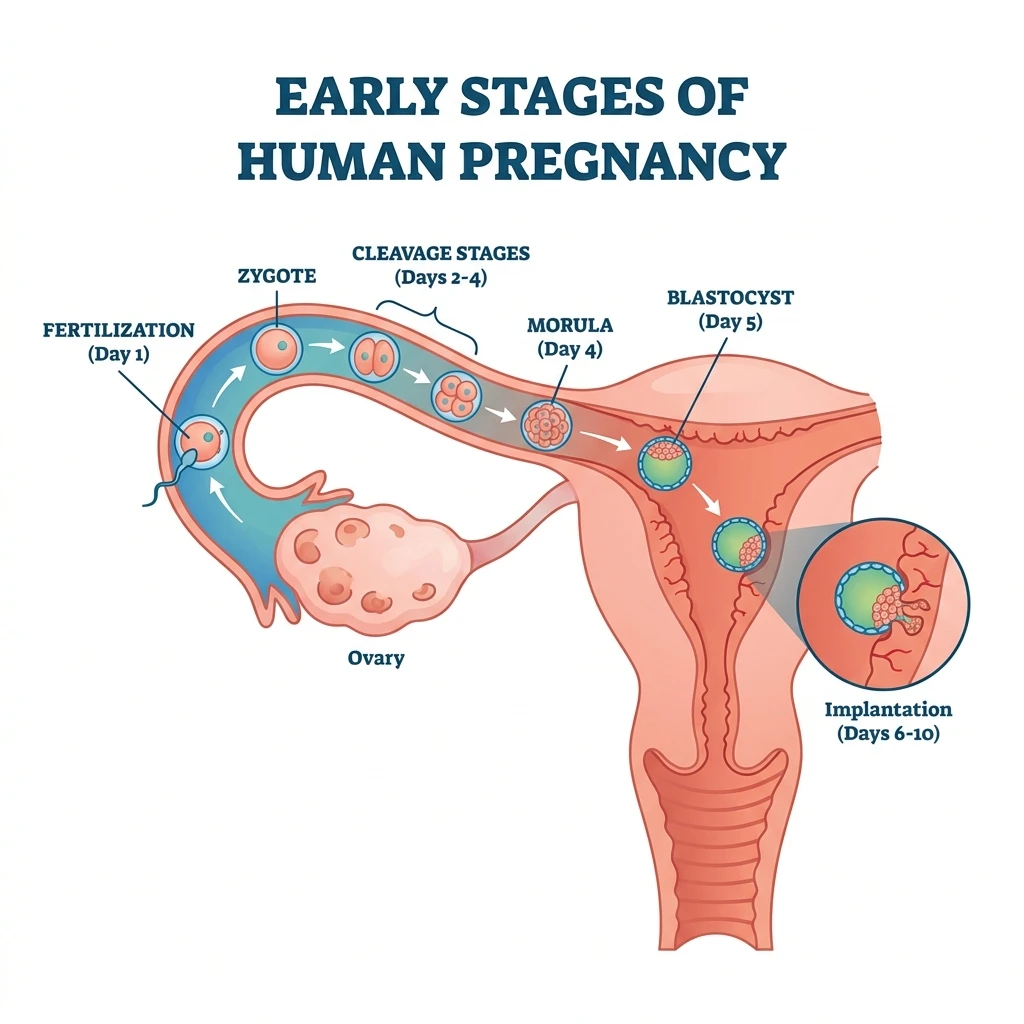
Figure 1: Timeline from ovulation and fertilization to implantation.
The 6-Day Fertile Window
The window of fertility begins 5 days before ovulation and ends on the day of ovulation. This is because sperm can remain viable inside the female body for up to 5 days, while the egg is viable for only 12 to 24 hours after release.
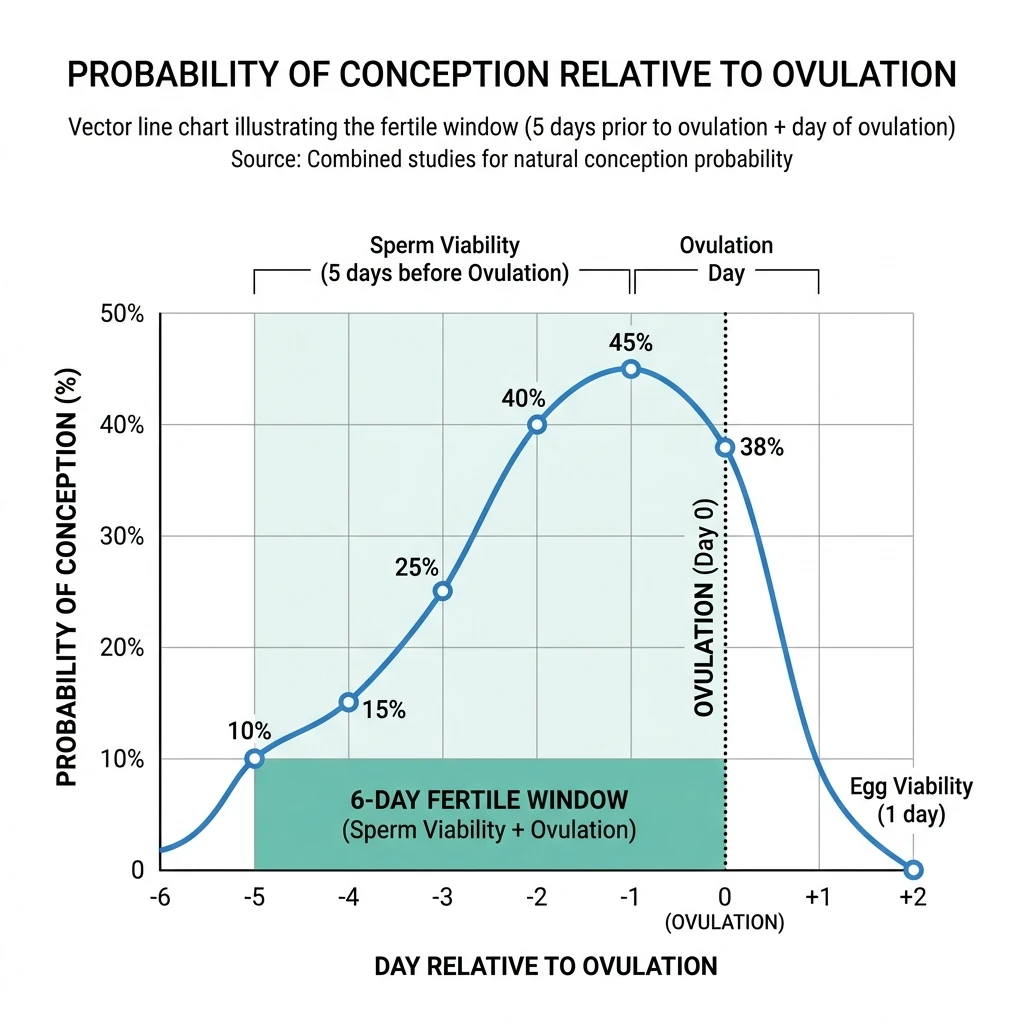
Figure 2: Conception probability by day relative to ovulation.
How Conception Dates Are Calculated
Depending on the information available, clinicians use three primary dating methods:
- Estimated Due Date: Since standard pregnancies average 280 days (40 weeks) from the LMP, the estimated date of conception is calculated by subtracting 266 days (38 weeks) from the due date.
- Last Menstrual Period (LMP): Estimated conception occurs 14 days after the first day of the last period, adjusted for the average cycle duration (LMP + Cycle Length - 14).
- Dating Ultrasound: A sonogram measures fetal crown-rump length (CRL) during early pregnancy to determine gestational age. The conception date is derived by subtracting the estimated gestational age (in weeks and days) from the scan date and adding 14 days.
Fertilization vs. Conception: Clinical and Legal Definitions
While the terms fertilization and conception are often used interchangeably in casual conversation, medical science distinguishes them.
Fertilization occurs when a single sperm penetrates a mature egg in the fallopian tube to form a single-celled zygote.
Conception is the broader biological process of becoming pregnant. In medical terminology, this requires both successful fertilization and successful implantation of the blastocyst into the vascular wall of the uterus.
This distinction is clinically relevant. In the United States, federal policies and major medical bodies (such as the American College of Obstetricians and Gynecologists) define pregnancy as beginning only at implantation. A significant percentage of fertilized eggs fail to implant and pass naturally out of the body; therefore, clinical pregnancy is established only once implantation is complete.
Frequently Asked Questions
How accurate is an ultrasound for determining conception dates?
+
Early obstetric ultrasounds (performed in the first trimester, between weeks 6 and 12) are the most accurate clinical tool for pregnancy dating, with an accuracy margin of ±3 to 5 days. Later in pregnancy, biological variation in fetal growth makes ultrasound dating less precise (margin of ±1 to 2 weeks in the second trimester, and ±3 weeks in the third trimester).
Is it possible to conceive outside of the fertile window?
+
No. Conception can only occur if a viable sperm meets a viable egg. Since an egg survives for at most 24 hours after release, and sperm survives up to 5 days, the biological fertile window is strictly limited to the 5 days before ovulation and the day of ovulation itself.
What is the difference between gestational age and embryonic age?
+
Gestational age is calculated from the first day of the mother's last menstrual period (LMP) and is the standard timeline used by obstetricians. Embryonic age (or fetal age) is the actual age of the developing embryo from the moment of conception, which is typically 2 weeks shorter than gestational age.
Why does cycle length affect the estimated due date?
+
Standard due date calculations assume a default 28-day menstrual cycle where ovulation occurs on day 14. If a woman has a regular 35-day cycle, she ovulates around day 21. Her estimated due date is adjusted accordingly to prevent false diagnoses of post-term or pre-term pregnancy.
- Wilcox, A. J., Weinberg, C. R., Baird, D. D. 1995. "Timing of sexual intercourse in relation to ovulation — effects on the probability of conception, survival of the pregnancy, and sex of the baby." New England Journal of Medicine 333(23): 1517-1521.
- "Methods for Estimating the Due Date," Committee Opinion No. 700. American College of Obstetricians and Gynecologists (ACOG). Obstetrics & Gynecology 129(5): e150-154.
- O'Rahilly, R., Müller, F. 2001. "Human Embryology & Teratology," 3rd Edition. Wiley-Liss.