
BMR Calculator
BMR Calculator
Basal Metabolic Rate Calculator
Awaiting Inputs
Provide your gender, age, weight, and height, then click calculate to view your basal metabolic rate and daily needs.
What is Basal Metabolic Rate (BMR)?
Your Basal Metabolic Rate (BMR) is the total number of calories your body needs to perform basic, life-sustaining functions while at complete rest. These functions include breathing, blood circulation, cell production, nutrient processing, and maintaining body temperature.
BMR accounts for the largest portion of your daily calorie expenditure—typically 60% to 75% for most sedentary individuals. By calculating your BMR, you establish a baseline that helps you determine your Total Daily Energy Expenditure (TDEE), allowing you to design weight loss, muscle gain, or maintenance nutrition plans with scientific precision.
Standard BMR Estimates by Body Weight
While body composition, age, and height play major roles, body weight is the strongest predictor of BMR. The table below outlines standard BMR estimates for typical weights in active adult ranges:
| Weight (kg / lbs) | Men BMR (kcal/day) | Women BMR (kcal/day) |
|---|---|---|
| 50 kg / 110 lbs | 1,350 kcal | 1,210 kcal |
| 60 kg / 132 lbs | 1,480 kcal | 1,320 kcal |
| 70 kg / 154 lbs | 1,610 kcal | 1,430 kcal |
| 80 kg / 176 lbs | 1,740 kcal | 1,540 kcal |
| 90 kg / 198 lbs | 1,870 kcal | 1,650 kcal |
| 100 kg / 220 lbs | 2,000 kcal | 1,760 kcal |
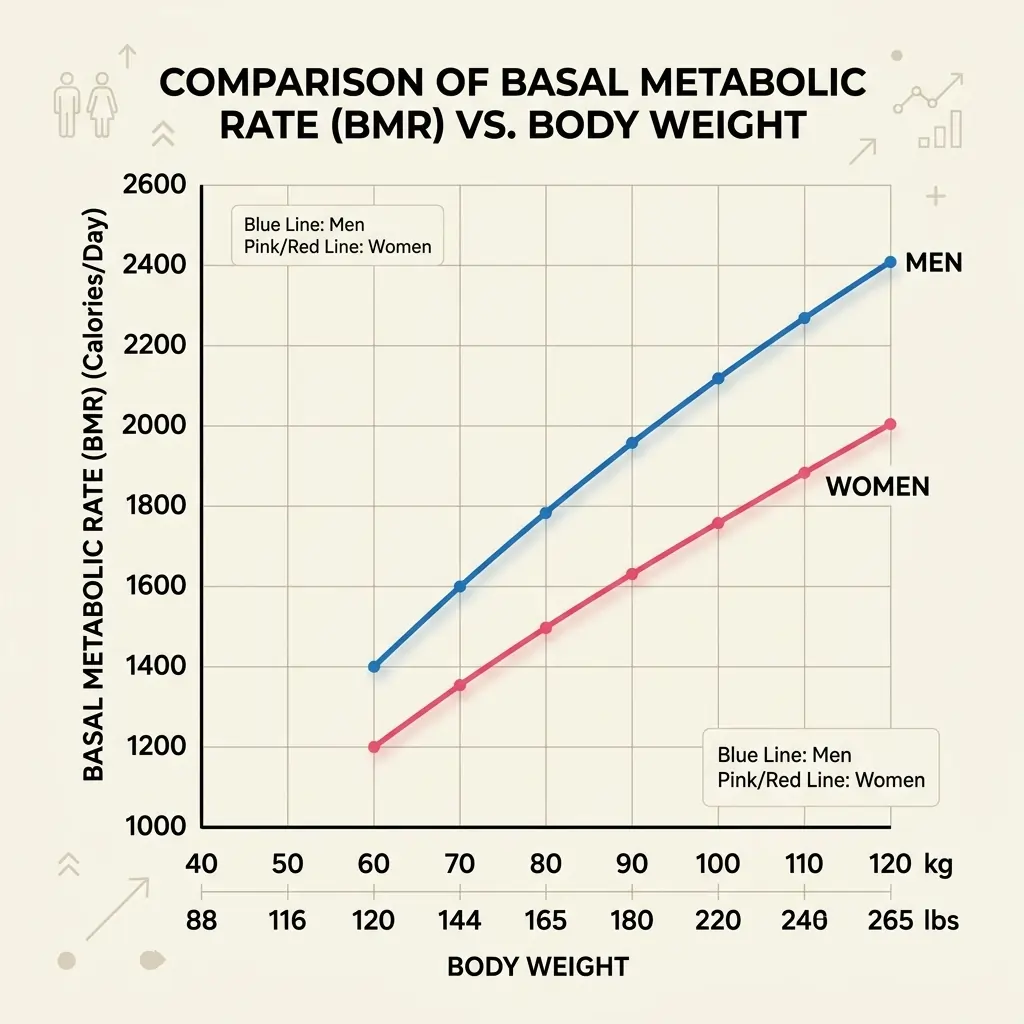
Figure 1: Comparison of typical BMR values by weight between men and women.
Understanding TDEE and Activity Multipliers
Your Total Daily Energy Expenditure (TDEE) is calculated by multiplying your base BMR by an activity factor. This accounts for digestion energy and physical motion levels:
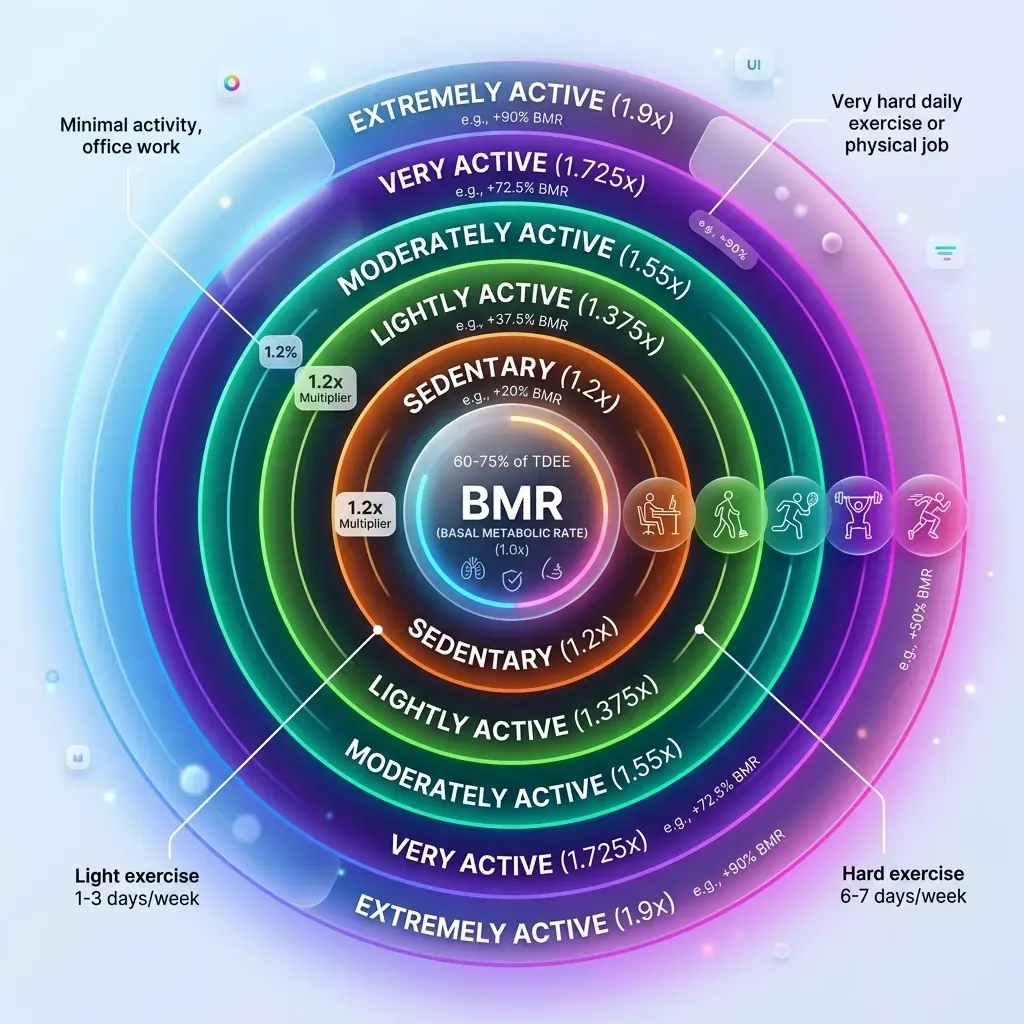
Figure 2: Distribution of TDEE activity factor multipliers.
| Activity Level | Multiplier | Description |
|---|---|---|
| Sedentary | 1.2x | Desk job, little to no weekly exercise. |
| Lightly Active | 1.375x | Light exercise or sports 1–3 days/week. |
| Moderately Active | 1.465x | Moderate exercise or sports 4–5 days/week. |
| Active | 1.55x | Intense training or sports 3–4 days/week. |
| Very Active | 1.725x | Hard exercise or heavy training 6–7 days/week. |
| Super Active | 1.9x | Very intense exercise daily, or physical job. |
1. The Mifflin-St Jeor Equation (Modern Standard)
Developed in 1990, it is currently the most recommended formula by the Academy of Nutrition and Dietetics.
2. The Revised Harris-Benedict Equation
Originally published in 1918, it was revised in 1984 by Roza and Shizgal for improved accuracy.
3. The Katch-McArdle Formula (Lean Mass Based)
If you know your body fat percentage, this is the most accurate formula as it calculates BMR strictly using Lean Body Mass (LBM).
Frequently Asked Questions
How do I increase my BMR?
+
The most effective way to increase your BMR is by building skeletal muscle tissue. Muscle is metabolically active and burns more calories at rest than fat tissue. Consuming adequate protein and staying hydrated also support baseline metabolism.
Can you eat below your BMR?
+
Eating below your BMR is generally not recommended unless under medical supervision. Your BMR represents the energy needed for basic cellular life; eating below it for extended periods triggers metabolic adaptation (slowdown), fatigue, nutrient deficiencies, and muscle loss.
What is the difference between BMR and RMR?
+
BMR requires strict measurement conditions: waking up after 8 hours of sleep, 12 hours of fasting, in a dark, temperature-controlled environment. RMR (Resting Metabolic Rate) is measured under less restrictive conditions (normal resting state) and is typically 5-10% higher than BMR.
How accurate are BMR formulas?
+
For most people, the Mifflin-St Jeor equation is within 10% of actual metabolic output. However, for highly muscular individuals or those with high body fat, the Katch-McArdle equation is far more accurate because it directly incorporates lean mass composition.