BAC Calculator
BAC Calculator
Estimate Blood Alcohol Concentration & Sober Timeline
Awaiting Inputs
Provide gender, body weight, elapsed time, and alcohol quantities consumed to view your blood alcohol concentration timeline.
Understanding Blood Alcohol Concentration (BAC)
Blood Alcohol Concentration (BAC) is a commonly used measure of alcohol intoxication, also known as drunkenness. It is typically expressed as a percentage of alcohol per volume of blood in your body. For example, in the United States (US), a BAC of 0.08 (0.08%) translates to exactly 0.08 grams of alcohol per 100 mL of blood.
In the US, the legal limit for BAC when driving is 0.08%. Drivers who are over the age of 21 (the legal drinking age in the US) who have a BAC equal to or greater than 0.08% can face penalties, including fines, license suspension, or jail time. Penalties for those under the age of 21 are significantly stricter, though they vary by state. For individuals under 21, the legal limit ranges from a zero-tolerance 0.01% to 0.05% depending on state-level legislation.
Alcohol and Health Effects
Alcohol consumption has a number of short-term as well as long-term effects on the human body. Short-term effects include dehydration, loss of motor coordination, slurred speech, and acute alcohol intoxication. Long-term effects can include serious alterations in the metabolism of the liver, cellular changes in the brain, and structural cardiovascular damage. Persistent consumption can also result in alcohol use disorder (alcoholism), which is generally described as the compulsive use of alcohol that results in problems with mental or physical health.
Moderate Drinking Claims & Risks
Many studies regarding the effects of alcohol on health have been performed. Although there are some studies that support the conventional wisdom that a glass of red wine a day can have potential health benefits (due to antioxidants like resveratrol), these claims have not been rigorously proven in clinical trials. While some people may experience certain health benefits as a result of consuming some alcohol daily, not all people will, and the benefits do not come without risk.
Although alcohol, in moderation, is not necessarily deleterious, and may even have some positive benefits, more recent epidemiological studies recommend that alcohol should not be consumed for its potential health benefits. While light or moderate alcohol (~1 drink per day: 12 fl oz beer, 5 fl oz wine, 1.5 fl oz distilled spirits) drinkers can certainly remain healthy, it is not fully known whether these benefits are worth the potential risks, since the potential benefits are relatively small compared to the risks.
- Slightly reducing the risk of developing and dying from heart disease
- Reducing the risk of ischemic stroke (blocked arteries in the brain)
- Reducing the risk of diabetes
Heavy Drinking & Chronic Hazards
Heavy alcohol use has no health benefits and leads to physical dependency. Heavy drinking, as defined by the Mayo Clinic, is having more than three drinks a day for women and men over 65, and more than four drinks per day, or more than 14 drinks a week for men younger than 65.
Excessive drinking can result in serious health issues, including:
- Increased risk of certain cancers (breast, mouth, throat, esophagus, liver)
- Sudden death as a result of pre-existing cardiovascular disease
- Heart muscle damage (alcoholic cardiomyopathy) leading to heart failure
- Stroke and high blood pressure
- Liver disease (fatty liver, alcoholic hepatitis, cirrhosis)
- Accidental serious injury or death from motor vehicle accidents
- Irreversible brain damage and cognitive decline
Legal BAC Driving Limits Around the World
Traffic safety laws globally set strict thresholds for legal intoxication. Exceeding these limits can result in heavy penalties, license suspensions, or criminal charges:
| Country / Region | Driving Limit | Enforcement / Policy |
|---|---|---|
| United States & Canada | 0.08% | Standard limit for drivers 21+. Zero-tolerance for minors. |
| United Kingdom | 0.08% | Applies to England, Wales, and Northern Ireland. (Scotland: 0.05%). |
| Australia & Western Europe | 0.05% | Strict random breath tests and license suspensions. |
| Japan | 0.03% | Zero-tolerance zones; penalties apply to passengers as well. |
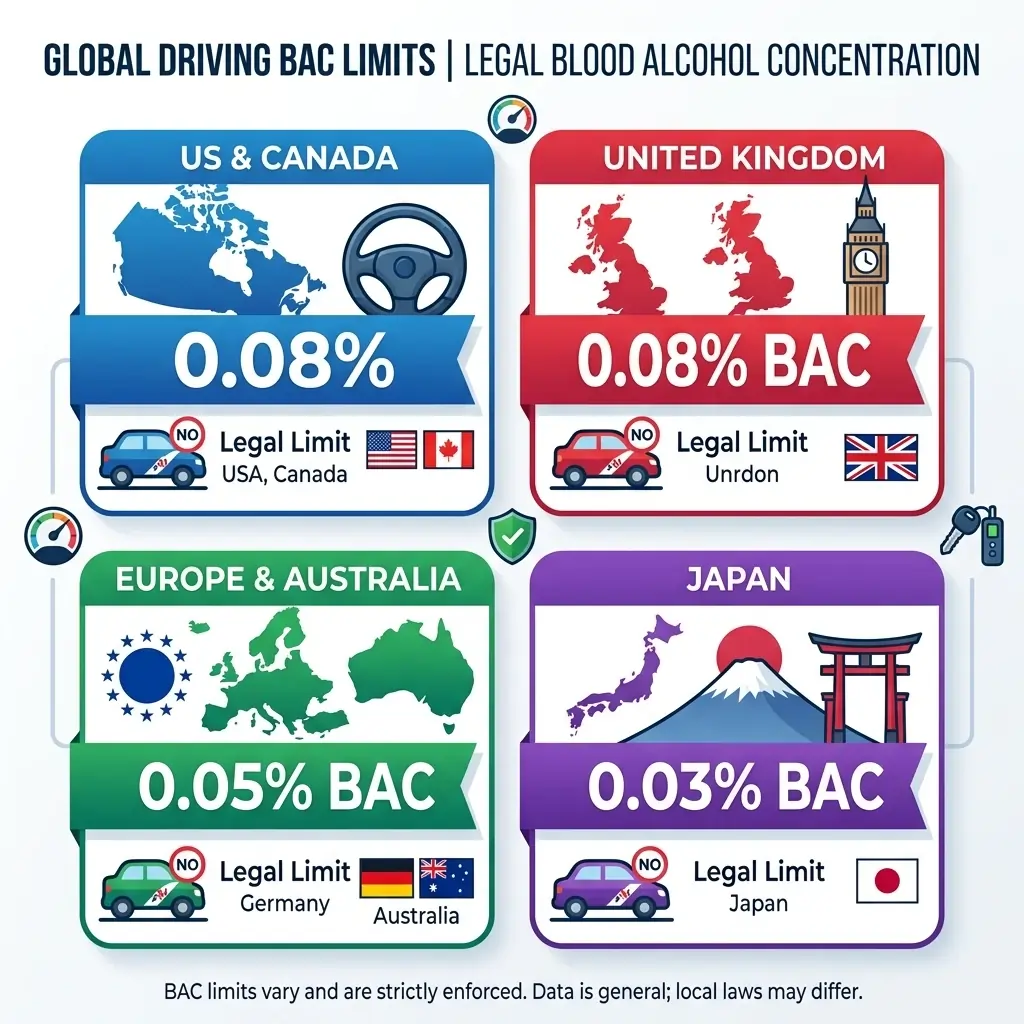
Figure 1: Comparison of driving limits across major global jurisdictions.
Global Regulations & Complete Alcohol Bans
While most countries regulate alcohol via sales licensing, taxation, and minimum drinking ages, several nations impose absolute prohibitions on alcohol manufacturing, distribution, sale, and consumption:
- Saudi Arabia: Strict national prohibition. Importing, brewing, purchasing, and consuming are completely illegal for all citizens and foreign residents.
- Iran: Complete prohibition for Muslim citizens. Possessing or selling alcohol carries severe legal penalties.
- Kuwait: Absolute ban. Alcohol imports, sales, and retail distribution are strictly prohibited by law.
- Libya, Somalia, & Mauritania: Total national bans on commercial sales and consumption.
- Pakistan & Brunei: Prohibited for Muslim citizens, but legal for non-Muslim residents or tourists who hold special state licenses or personal consumption permits.
- Qatar & United Arab Emirates: Sale is prohibited in public retail spaces, but legal for non-Muslim residents in licensed hotel bars and clubs with state permits.
- India: Varies by state. States like Gujarat, Bihar, Nagaland, and Mizoram enforce complete prohibition, whereas others heavily tax and license distribution.
Religious Rulings & Stances on Alcohol
Throughout history, spiritual and religious scriptures have provided guidelines and decrees on intoxicants, reflecting various theological viewpoints:
In Islamic law, alcohol and all other forms of chemical intoxicants (collectively termed Khamr) are classified as Haram (forbidden) in any quantity. The Quran explicitly prohibits consumption (Surah Al-Ma'idah 5:90-91), describing it as a tool of spiritual distraction and heedlessness, and warning that the harms, addictions, and sins resulting from alcohol far outweigh any potential economic or physical benefits. Muslims are strictly forbidden from drinking, producing, selling, transporting, or serving alcohol.
The Fifth Precept (Pancha Sila) advises all adherents to abstain from fermented and distilled liquors that lead to heedlessness. Because clarity of mind and mindfulness are central to Buddhist meditation and the path to enlightenment, mind-clouding substances are strongly discouraged.
Varies by denomination. Traditional Catholic, Orthodox, and Anglican teachings allow moderate consumption (including wine in liturgical Holy Communion) but strictly condemn drunkenness. Evangelical and Baptist traditions often advocate for teetotalism (complete abstinence).
Wine is integrated into religious rituals, including the Kiddush blessing for Shabbat, weddings, and Pesach (Passover). While wine is appreciated as a source of joy and blessing, excessive drinking, loss of self-control, and intoxication are condemned in biblical proverbs.
Stances vary by sect, caste, and region. Most ancient texts discourage intoxicants, and complete abstinence is practiced by priests, ascetics (sadhus), and devout yoga practitioners to maintain a Sattvic (pure) state of mind and body.
Effects by Blood Alcohol Concentration
The degree of physical and cognitive impairment caused by alcohol intoxication varies based on BAC, as shown in the table below. Impairments range from subtle effects that can only be detected with special tests at levels between 0.001-0.029%, to problems with concentration, reflexes, motor control, and more, including a serious possibility of death at 0.50% or more.
| BAC (%) | Behavioral Symptoms | Cognitive & Motor Impairments |
|---|---|---|
| 0.001% – 0.029% | Average individual appears normal. | Subtle effects that can be detected with special laboratory tests. |
| 0.030% – 0.059% | Mild euphoria, relaxation, joyfulness, talkativeness, decreased inhibition. | Impairment in concentration. |
| 0.060% – 0.099% | Blunted feelings, reduced sensitivity to pain, euphoria, disinhibition, extraversion. | Impairment in reasoning, depth perception, peripheral vision, and glare recovery. |
| 0.100% – 0.199% | Over-expression, boisterousness, possibility of nausea and vomiting. | Slowed reflexes, increased reaction time, gross motor control loss, staggering, slurred speech, temporary erectile dysfunction. |
| 0.200% – 0.299% | Nausea, vomiting, emotional swings, anger or sadness, partial loss of understanding, impaired sensations, decreased libido, possibility of stupor. | Severe motor impairment, loss of consciousness, memory blackout. |
| 0.300% – 0.399% | Stupor, central nervous system depression, loss of understanding, lapses in and out of consciousness, low possibility of death. | Impaired bladder function, breathing, dysequilibrium, heart rate. |
| 0.400% – 0.500% | Severe central nervous system depression, coma, possibility of death. | Slowed breathing, heart rate, positional alcohol nystagmus (involuntary eye oscillation). |
| > 0.50% | High possibility of death. | Complete metabolic collapse, respiratory arrest. |
What is a Standard Drink?
Standard drink definitions help you track your total alcohol consumption. In the United States, a "standard drink" contains exactly 14 grams (or 0.6 ounces) of pure ethanol:
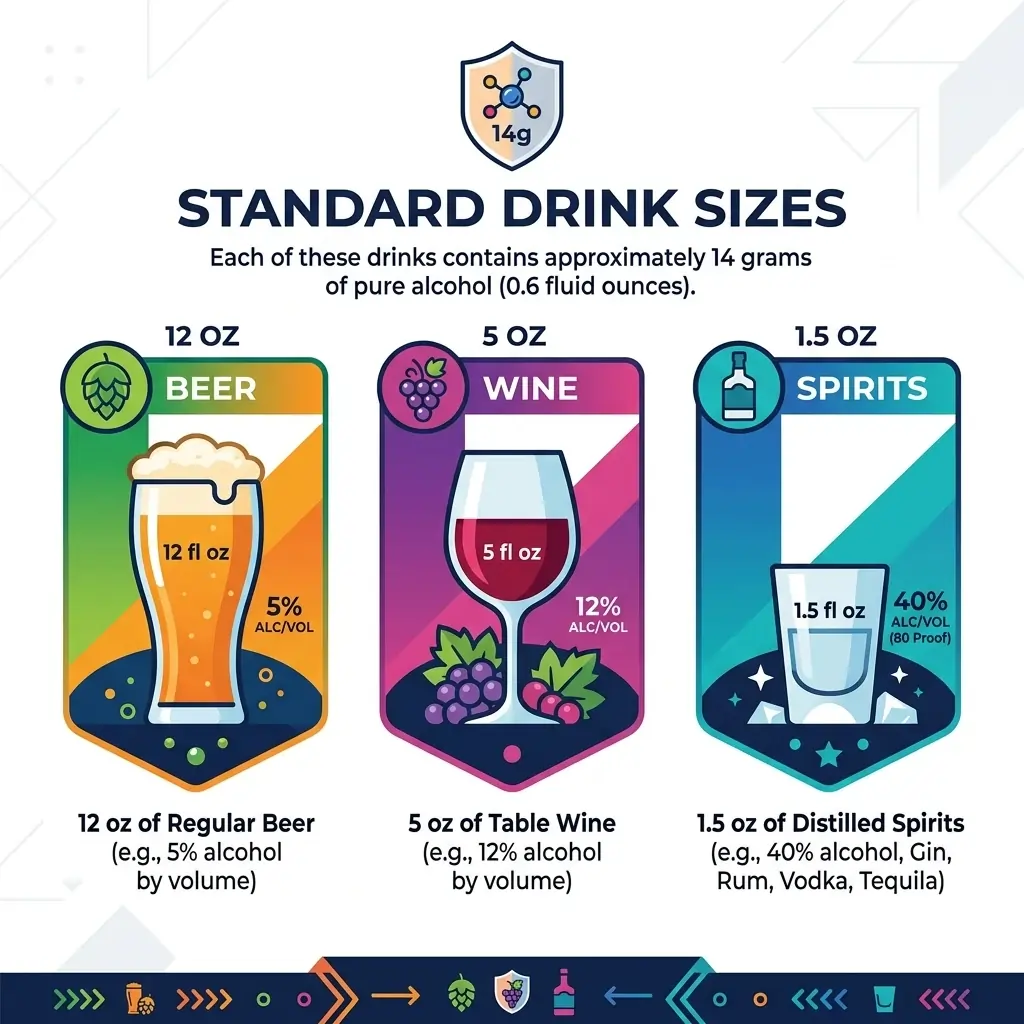
Figure 2: Serving size volume equivalence of standard alcoholic beverages.
| Beverage Type | Volume | Average ABV |
|---|---|---|
| Standard Beer | 12 fl oz / 355 ml | ~5.0% ABV |
| Table Wine | 5 fl oz / 148 ml | ~12.0% ABV |
| Distilled Spirits (Liquor) | 1.5 fl oz / 44 ml | ~40.0% ABV (80 proof) |
How BAC is Calculated
The calculator uses the Swedish Widmark formula to estimate peak BAC, and subtracts metabolic elimination over time:
[where Gender Factor: Male = 0.68, Female = 0.55]
Frequently Asked Questions
How long does it take for a standard drink to leave your system?
+
On average, the liver metabolizes alcohol at a constant rate of roughly 0.015% BAC per hour. This equates to approximately one standard drink (14g of pure alcohol) leaving your system every 1 to 2 hours, depending on body weight.
Does drinking water or coffee sober you up faster?
+
No. Only time can lower your BAC. While water helps you stay hydrated and coffee can increase alertness, they do not speed up the metabolic rate of the liver, which continues to filter alcohol at a constant rate of ~0.015% per hour.
How does food consumption affect your BAC?
+
Eating food before or during drinking slows the rate of alcohol absorption in your stomach, resulting in a lower and delayed peak BAC. Drinking on an empty stomach triggers rapid absorption, causing your BAC to rise very quickly.
Why is the gender factor different for men and women?
+
The Widmark gender factor (0.68 for men, 0.55 for women) accounts for differences in average body composition. Women generally have a higher percentage of body fat and less water content per pound of body mass than men, meaning the same amount of alcohol is distributed in less fluid, leading to a higher BAC.